Showing posts with label Sea animals. Show all posts

Monday, August 24, 2015

Shark

Sharks are a various gathering of rapacious species, going in size from the little midget shark (Squalioluslaticaudus), which develops at under fifteen centimeters long, to the tremendous whale shark (Rhincodontypus), which achieves fifteen meters or more long and speaks to the biggest fish types of any sort. Inquisitively, the whale shark and the almost as-expansive luxuriating shark (Cetorhinusmaximus) are microscopic fish feeders. They catch their small nourishment life forms by swimming surprised through the water and straining out the microscopic fish with fine comb like structures in their gills, called gill rakers. Most sharks, on the other hand, have sharp, blade like teeth, suitable for assaulting and encouraging on more dynamic prey. The white shark (Carcharodoncarcharias) is an insatiable wandering predator that may develop to twelve meters long. It has been ensnared in more deadly shark assaults than some other species. Notwithstanding all around created eyes, internal ears, and olfactory (smell) organs, sharks have a sidelong line framework, as do most hard fishes. This is a sense organ comprising of a trench underneath the skin, on every side of the body, associated with the surface by various pores. It is delicate to vibrations in the water, giving sharks a feeling of "far off touch" that empowers them to explore and chase their prey in dinky water. Another tactile component of sharks and different elasmobranchs is an electroreception framework, comprising of receptors, called ampullae of Lorenzini, on the surface of the nose. Obviously, this framework is valuable in chasing, since it permits the frail electric fields created by the muscle compressions of prey species to be recognized. Itmayalso capacity in intraspecific (correspondence with others of the same species), since numerous elasmobranchs have electric organs. Sharks are normally torpedo-molded and marginally discouraged in frame that is, leveled through and through. They swim by method for musical undulations of the body, which are created by consecutive withdrawal of the myomeres (body-muscle fragments). The tilt of the shark's pectoral balances (the combined balances toward the front of the body) and heterocercal tail (the upper flap of the tail balance being bigger than the lower projection) empower it to keep up its relative profundity position as it swims forward, regardless of the way that the shark does not have a swim bladder. Additionally enhancing the lightness of sharks are their ligament skeletons, which are lighter than bone, and their vast, slick livers. Some shark livers contain an interesting low-thickness oil called squalene. Sharks and different cartilaginous marine fishes manage the centralization of solutes (broke down substances) in the body in a way altogether different from that of the hard fishes, which either hold salt (freshwater hard fishes) or emit salt (marine hard fishes). Sharks keep up a focus near or higher than that of seawater by holding urea and trimethylamine oxide, two generally nontoxic nitrogenous waste items. Proliferation in the sharks and different cartilaginous fishes is described by inward preparation. A couple of intromittent, or copulatory, organs called claspers are situated on the pelvic blades (the matched balances closer the tail area) of the male. These are utilized to exchange sperm to the female genital opening. Fetuses stay in the body or are discharged in egg cases, for a long incubation, or advancement, period. A little number of youthful either are conceived alive or seal from an egg case in dynamic, all around created structure.


Basic Shark Species
 

Among the more recognizable shark species are individuals from the family Lamnidae. This family incorporates the feared white shark and other "mackerel sharks, for example, the shortcoming (Isurusoxyrinchus)- a mainstream diversion fish and sustenance fish, however a risky species also. Another family, the Carcharhinidae (composition sharks), with many species, incorporates two man-eaters, the tiger shark (Galeocerdocuvieri) and the bull shark (Carcharhinusleucas). Bull sharks have been found in waterways and lakes in Central and South America; they have infiltrated the Amazon River to the extent Peru. Yet another gathering of hazardous sharks is the family Sphyrnidae, the hammerheads. These species are recognized by an along the side extended head, having the eyes and nasal openings at the closures of the hammer like augmentations. The capacity of this game plan is misty, however it likely guides in distinguishing and homing in on prey living beings. To understudies of similar life structures, the prickly dogfish (Squalusacanthias) is maybe the most recognizable shark, since it is regularly dismembered in the classroom as a common illustrative of the lower vertebrates. This overall species, occupying calm beachfront territories, is likewise a vital nourishment fish in numerous parts of the world. It generally shows up in England, for instance, in fish sticks and french fries.

Sharks and individuals


Sharks and their relatives are imperative and fascinating in different courses also. Numerous species have significance as sustenance, particularly in Asia and the South Pacific. Different items determined from sharks incorporate shark liver oil (which was a critical vitamin A source before the improvement of engineered vitamin A), shark skin (for calfskin items), and shark ligament subordinates (utilized as a part of pharmaceutical). Despite the fact that the genuine danger of shark assault anyplace on the planet is measurably little, sharks have been known not such severe executioners that enthusiasm for anticipating shark assaults is across the board. Different substance shark repellants, for example, "shark chaser" have been attempted. This water-solvent blend of color and copper acetic acid derivation was given to U.S. military faculty amid World War II for utilization on the off chance that they were stranded in the ocean after their boats were sunk or planes brought down. It was, in any case, later demonstrated to have practically zero impact on sharks. Different systems have incorporated the cartridge-stacked "blast stick", which is presumably a bigger number of unsafe to the untrained client than to a shark. An additionally encouraging gadget is the "shark screen", a gliding plastic pack that can be loaded with water and entered-veiling the scents, sounds, and developments that may pull in sharks.

For more information about online job in Nepal Click Here

Seahorse

Seahorses are exceptionally surprising fish. To start with, they swim upright and inadequately. They do not have the tail balance that furnishes other fish with the greater part of their swimming force; rather seahorses utilize a little dorsal balance to advance, pectoral balances close to the head to turn and cow, and a swim bladder to climb or down in the water. Second, their shape is exceptional: They have a claimed steed molded head at a right edge to their harsh body, and a prehensile tail. Their nose is adjusted for suctioning passing scavangers, sifting the water through their gills. Their eyes move freely, allowing them to watch prey and their surroundings without moving. Their body is thorny and bumpy, because of hard rings opposite to their spines. Their tail licenses them to stay themselves by getting a handle on vegetation or coral. Third, as they utilize disguise to escape predators, they can grow rings from their skin to look like ocean plants and, as chameleons, can change shading to coordinate their environment. They can likewise change shading in light of different seahorses, lighting up because of a mate and obscuring in accommodation to an adversary. The thirty-five seahorse species vary in size, shape, shading, and living space. The littlest, Hippocampus bargibanti (called the dwarf seahorse), is a unimportant 1.3 centimeters (0.5 inches) from nose to tail, while the biggest, H. ingens (the Pacific seahorse), is 35 centimeters (14 inches) in length. In spite of the fact that seahorses by and large carbon copy, the species contrast in the quantity of hard rings around their bodies and tails, and one, H. abdominalis (the huge midsection seahorse), has an exceptionally claimed belly. They shift in shading, including pink, orange, yellow, cocoa, dark, and dark, with the male as a rule the more brilliant. They live in salt water at a profundity of one to a quarter century (three to eighty feet), at a temperature of 6 to 30 degrees Celsius (43 to 86 degrees Fahrenheit), and in one of three beachfront living spaces: ocean grass, mangroves, and coral reefs. The species are particular to diverse areas; for occasion, H. bargibanti is found around the island ofNewCaledonia in the west Pacific, H. ingens possesses the subtropical west shores of North, Central and South America, while H. abdominalis exists around New Zealand, and in addition on the southern and eastern shores of Australia. 

The Life Cycle of Seahorses


Contingent upon the species and area, seahorses may have a rearing season (for the most part amid the hotter time) or may replicate ceaselessly. Most seahorses seem to shape monogamous connections, in spite of the fact that H. abdominalis is indiscriminate. At the point when the male is responsive, the pair will perform a mating move that may keep going for quite a long time to a day, finishing with the female storing her eggs through her ovipositor into the agonizing pocket of the male, who will prepare them with his semen. That the male gets to be pregnant is the most strange element of seahorses. He gives the treated eggs oxygen and sustenance through a slender system in the pocket, which additionally uproots waste items. The hatching period relies on upon the species and conditions, enduring from ten days to six weeks. At the point when the full fledged youthful trapdoor, they are ousted froman opening in the pocket in a cadenced procedure that may last up to two days. The quantity of posterity conceived commonly shifts from 10 for the littlest species to 200, despite the fact that the record is 1,572. The male will typically turn out to be quickly pregnant once more. The youthful must discover nourishment, for example, larval shellfish, and must maintain a strategic distance from predation from fish, water flying creatures, or crabs. Likewise, tempests may clear them out to ocean appended to kelp, and scatter them to situations to which they may not be suited. On the off chance that they find adequate sustenance and evade predation, they can develop in four to six months, mate, and multiply. While most seahorses don't make due to development, they can live from one to four years, contingent upon the species.

Eventual fate of Seahorses


Overfishing is a genuine risk to the eventual fate of seahorses. The interest for them is vast in customary Asian prescription, where they are touted as cures for everything from asthma and coronary illness to incontinence and impotence.Anestimated twenty million seahorses are so utilized yearly. Live creatures are likewise sold for aquariums, where keeping up them is troublesome as a result of their nutritious inclination for live shellfish and their defenselessness to infection. Moreover, drag net angling in beachfront regions harvests seahorses unintentionally. Any devastation of ocean grass beds, mangroves, or coral reefs additionally represents a danger to these captivating creatures. Their future relies on upon economical angling in the wild and creating seahorse aquaculture, and additionally minimizing unexpected harvest and living space pulverization.

Fascinating Facts


Seahorses change in size from 0.6 to 14 inches long.
Seahorses have equine (stallion like) state of the head, lengthened body and twisted tail. They don't have scales.
Regardless of their particular body shape, seahorses have gills, swim bladder and balances, much the same as all other fish.
Shading of the seahorse body matches with its surroundings. A few animal types change their body shading under anxiety conditions or as a piece of mating custom.
Seahorses hold a Guinness World Record as the slowest swimmers in the sea. Smaller person seahorse swims 5 feet every hour.
Seahorse can move its balances 50 times in second, however that is insufficient for effective development. Then again, they are very flexibility and ready to climb, down, forward and in reverse.
Seahorse can be effortlessly moved away by the ocean momentum in light of its minor structure and failure to swim quick. Fortunately, it has a prehensile tail which permits it to snatch a coral branch or ocean weed and anticipate flow actuated development.
Seahorses eat tiny fish and little scavangers. They don't have teeth and stomach and nourishment goes rapidly through their body. Seahorses have the capacity to eat up to 3000 saline solution shrimp for every day.
Seahorses cooperate with one another by creating the clicking sounds. These sounds are likewise delivered amid dinners.
A few types of seahorses are monogamous (they mate forever), while other stay together just amid a reproducing season.
The best  known certainty about seahorses is that male conveys the infants. Mating custom is unpredictable and it includes moving when seahorses interweave their tails and move around tangled. It may keep going for a considerable length of time.
Male seahorses have a pocket on the front side of their body. At the point when female stores her eggs inside the pocket, male treats them inside. Male can convey up to 2000 children at the time.
Pregnancy keeps going somewhere around two and five weeks. Youthful seahorses look like smaller than normal adaptations of their guardians.
Lifespan of most seahorse species is somewhere around one and five years both in the wild and in the imprisonment.
Just 1% of children will live sufficiently long to achieve the adulthood.

For more information about online job in Nepal Click Here


Sunday, August 23, 2015

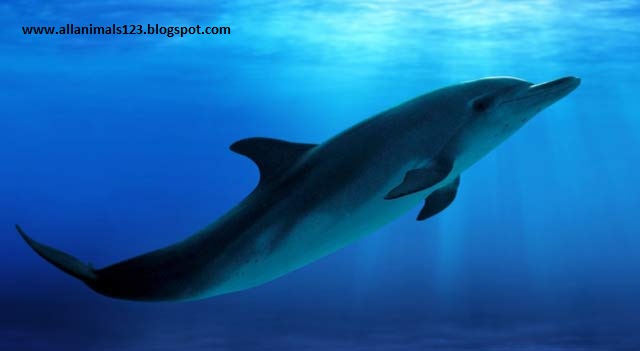
Dolphin


Introduction


Dolphins are extremely savvy and they appear to be very much cherished by people. This sea-going warm blooded animal has possessed the capacity to interest us in a mixed bag of ways. They are interested, structure solid bonds inside of their case, and they have been known not people in an assortment of circumstances incorporating salvages and with angling.

There are 43 unique types of dolphins that have been perceived. 38 of them are marine dolphins which are those that we are the most mindful of and 5 of them are waterway dolphins. It can be exceptionally intriguing to take a gander at each of these species extraordinarily versus dolphins in general.

They are exceptionally enlivening because of the jumps that they make out of the water. Some of them jump up to 30 feet noticeable all around as they do as such. They need to rise up to the top to for water at diverse interims to get air. This can be from 20 seconds to 30 minutes between when they get air. The body of the dolphin is grayish blue and the skin is extremely touchy to human touch and to different components that could be in the water.

Despite the fact that dolphins have 100 teeth, they don't utilize them for eating. They do use them to get the fish however and afterward they swallow them. They can devour up to 30 pounds fish for each day. They generally fill in as a group in their unit to get the school of fish encompassed and bunched up. From that point, they can push through the center and eat bounty as they do as such.

They alternate doing this so that all that took an interest get the chance to feast on the fish. This is only one of the various sorts of nourishing methodologies that they may participate in. They do what is important to get the nourishment for the case individuals. It can incorporate bounced, crisscross examples, circles, and a mix of endeavors to take care of business.

Through broad examination, echolocation has been recognized as a key component of dolphin life. It permits them to convey in the water by recognizing sound waves. It is a perplexing capacity that originates from the melon that is situated in the leader of a dolphin. All dolphin species have a blowhole.

Dolphins have great vision, and they find themselves able to see what is around them both in the water and when they are over the surface of it. They have astounding listening to as well, with the capacity to find out about 10 times superior to anything people. The feeling of smell isn't very much produced for them however. The feeling of touch is extremely delicate for dolphins and they utilize it for holding inside of their units. They depend on a mix of their faculties to stay away from threat, to discover sustenance, and to mingle.

Dolphins have been collaborating with people for whatever length of time that we have known of their presence. Amid this time, their more perilous predator and the one and only that have drastically lessened dolphin populace is the human.

Intriguing Information About Dolphins

 Dolphin Habitat and Distribution


Dolphins live in saltwater yet they can likewise live in freshwater areas. Just a modest bunch of the species however are known not in freshwater districts. They have a tendency to stick to the shallow ranges of the water found along the mainland racks.

Dolphin Feeding


Since wild dolphins get and eat their nourishment submerged and examination is lavish and frequently difficult to do, the greater part of the information in regards to their bolstering propensities has originated from dissecting the substance of the stomachs of dead creatures that appear on the shoreline.

Dolphin Reproduction


Dolphins, as all well evolved creatures, bring forth live youthful, and attendant them with mammary organs, however it boggles the psyche to envision nursing submerged. Be that as it may, the conception of a dolphin begins much sooner than his diaper days; it begins with how Mom and Dad initially met.

Dolphin Evolution


There are numerous telling signs that the dolphin is identified with physical roots. The way that they have to rise up to the top of the water to get air is the most prevailing variable.

Dolphin Intelligence


If you somehow managed to venture out into the road and ask the initial ten individuals you see regardless of whether they trusted dolphins were animals of knowledge, 8 of 10 would presumably say yes.

Dolphin Predators


Dolphins are not chicken of the ocean; yet doubtlessly they make a wonderful feast for some predators. What's more, why not? With an outstandingly high fat substance, dolphin and other cetacean meat gives awesome sustenance to predators who stalk.

Dolphin Social Structure


Numerous specialists concur that dolphins to a great degree social animals and really appear to rely on upon this cooperation while chasing, mating and guarding themselves and their pods. Commonly, dolphins live and go in gatherings extending from 2-40 dolphins. Examination has additionally demonstrated dolphin cases as vast as a few hundred individuals.

For more information about online job in Nepal Click Here
Crab


There are two sorts of crabs. The unpredictable tailed crabs, or Anomurans, incorporate the recluse, porcelain, and mole crabs. Some have a little, decreased belly, and others, particularly the recluse crabs, have a to some degree looped mid-region that is tucked into a disposed of snail shell. The genuine crabs, or Brachyurans (short-tailed crabs), have an extraordinarily diminished midriff that is tucked forward underneath the carapace. In spite of prevalent thinking, crabs don't generally abandon sideways; they can stroll forward or in reverse with equivalent office. Afew of the quick moving crabs appear to utilize two sets of legs when running. The blue crab (Callinectessapidus) family, which likewise incorporates the recognizable woman crab (Ovalipesocellatus) have a paddlelike last match of limbs and are quick and spry swimmers. Crabs shift enormously fit as a fiddle. The littlest are pea crabs, which measure just a couple of millimeters over the carapace, while the legs of a Japanese creepy crawly crab can compass up to four meters. The distinctions fit as a fiddle have permitted crabs to colonize an extensive variety of living spaces. The vast majority of the 4,500 types of genuine crabs are marine, occupying the rough intertidal zone or tunneling in sand and mud. A few animal types are benthic and others attack freshwater, particularly in the tropics. Still others are physical or semiterrestrial, regularly extending far from water, despite the fact that they by and large incline toward soggy spots. A tree-harping tropical animal categories bolsters on coconuts. Biologically, all crabs capacity as scroungers, bolstering on dead or kicking the bucket creatures or natural flotsam and jetsam of any sort. Numerous species are additionally dynamic predators, equipped for executing little fish and tearing open the shells of diverse mollusks. Porcelain crabs, for instance, have one of their mouthparts furnished with long, padded setae that are cleared through the water. They get little particles and exchange them to different parts of the mouth, where they are eaten. Natural matter is dismantled by the pliers and passed on to the mouth by a progression of extremities called maxillipeds and maxillae.Apair of comblike mandibles monitor the mouth and cleave the nourishment into modest pieces, which are then swallowed.Ashort throat prompts a gastric factory comparable to the gizzard of different creatures, where sustenance is ground up.

Crab Reproduction


Conceptive practices differ, yet amid wooing guys may utilize different concoction, visual, or acoustic signs including pheromones, waving chelipeds forward and backward, or drumming at the passageway to the female's tunnel. Different guys manufacture pyramid-molded hills to draw in females. Taking after wooing the male exchanges sperm to her in a parcel called a spermatophore. The eggs are joined to the female's stomach extremities and structure an egg mass between the belly and the thorax. The stomach area is in this way strange and hangs descending when the female is conveying eggs. The eggs are typically brilliantly shaded with carotenoid colors, and can be red, yellow, blue, chestnut, or green. They extend in size and number between species, yet a vast marine crab can lay up to a million eggs at once. The little hatchlings are called zoea and are extremely normal summer parts of marine microscopic fish. It takes maybe a couple more sheds before the crablike structure is obvious. A hefty portion of the semiterrestrial and freshwater species form specifically into smaller than normal crabs.

Crabs as Food


Crabs are sustenance for a mixed bag of different creatures, including fish and bigger spineless creatures. To secure themselves, a few species painstakingly put ocean anemones on their carapace, while others, for example, the decorator crab, paste bits of shell everywhere on their carapace. Still different species, for example, the pea crab, take shelter inside clams and other shellfish, while drilling crabs dive tunnels into mud substrates or delicate limestone rocks.

Actualities


Crabs are decapod scavangers which have a short tail and are secured with a thick shell, or exoskeleton and are furnished with a solitary pair of hooks.

•              Crabs are spineless (creatures without a spine). Their exoskeleton shields them from predators and gives backing to their bodies.

•              They have smoothed bodies, two sensor radio wires, and two eyes situated on the end of stalks, and they are 10-legged creatures that walk sideways.

•              There speak the truth 6,793 types of crab found in the greater part of the seas around the globe, in crisp water and there are likewise some physical crabs (ones that live totally ashore). Numerous crabs live in the tropical areas.

•              Crabs can be as little as the pea crab which is just a couple of millimeters wide to the Japanese insect crab which can have a leg compass up to 4 meters (around 13 feet).

•              Crabs have five sets of legs (the first combine are known as the hooks).

•              Crabs are omnivores (eats both plants and creatures) and some food basically on green growth, others feast upon mollusks, worms, shellfish, parasites, microorganisms, and natural non-living material.

•              1 million tons of crabs are being eaten every year in eateries and homes everywhere throughout the world.

•              Marine crabs inhale submerged utilizing gills. Area crabs have two pits that demonstration like lungs and permit them to inhale air.


•              After they mate, the blue crab and others, store two million eggs and in a two week period the eggs will develop in the larva.

 For more information about online job in Nepal Click Here